
Learn system analysis, its process, tools, and real-world examples in this beginner-friendly guide.
In today’s digital-first world, businesses rely heavily on efficient systems to operate, scale, and compete. But how are these systems designed, improved, or replaced? That’s where system analysis comes in.
Whether you’re a student, aspiring IT professional, entrepreneur, or simply curious about how technology powers organizations, this comprehensive guide will walk you through everything you need to know about system analysis—from its meaning and process to tools and real-world applications.
What Is System Analysis?
System analysis is the process of studying a system—its components, interactions, and workflows—to understand how it works and how it can be improved or redesigned.
A “system” can refer to:
- A business process (e.g., payroll system)
- A software application
- An organizational workflow
- An IT infrastructure
Simple Definition:
System analysis is the practice of identifying problems, understanding requirements, and designing solutions to improve systems.
Why Is System Analysis Important?
System analysis plays a critical role in ensuring that organizations operate efficiently and effectively.
Key Benefits:
- ✅ Identifies inefficiencies and bottlenecks
- ✅ Improves productivity and performance
- ✅ Reduces operational costs
- ✅ Enhances user experience
- ✅ Supports better decision-making
Without proper system analysis, companies risk implementing flawed solutions that waste time and resources.
Key Components of a System
Before diving deeper, it’s important to understand what makes up a system:
- Input – Data entering the system
- Process – Actions performed on the data
- Output – Results produced
- Feedback – Information used to improve the system
- Control – Rules governing the system
The System Analysis Process
System analysis follows a structured approach. Here’s a step-by-step breakdown:
1. Problem Identification
The first step is recognizing that a problem exists.
Example:
A company notices delays in customer order processing.
2. Requirement Gathering
Analysts collect information from stakeholders such as:
- Employees
- Managers
- Customers
Methods include:
- Interviews
- Surveys
- Observation
- Document analysis
3. System Study & Analysis
At this stage, analysts:
- Examine current workflows
- Identify inefficiencies
- Map out system processes
4. Feasibility Study
Before implementing changes, analysts evaluate whether the solution is practical.
Types of feasibility:
- Technical feasibility
- Economic feasibility
- Operational feasibility
- Legal feasibility
5. System Design
This phase outlines how the new or improved system will work.
Includes:
- Data structures
- User interfaces
- Process flows
6. Implementation
The system is developed and deployed.
7. Testing & Evaluation
Ensures the system works correctly and meets requirements.
8. Maintenance
Ongoing updates and improvements after deployment.
Types of System Analysis
System analysis can be categorized into different types depending on the focus:
1. Structured System Analysis
Uses formal tools like:
- Data Flow Diagrams (DFDs)
- Flowcharts
2. Object-Oriented Analysis (OOA)
Focuses on objects and classes rather than processes.
3. Business System Analysis
Examines organizational workflows and operations.
4. IT System Analysis
Focuses on software, hardware, and technical systems.
Tools Used in System Analysis
System analysts use various tools to visualize and improve systems.
Popular Tools:
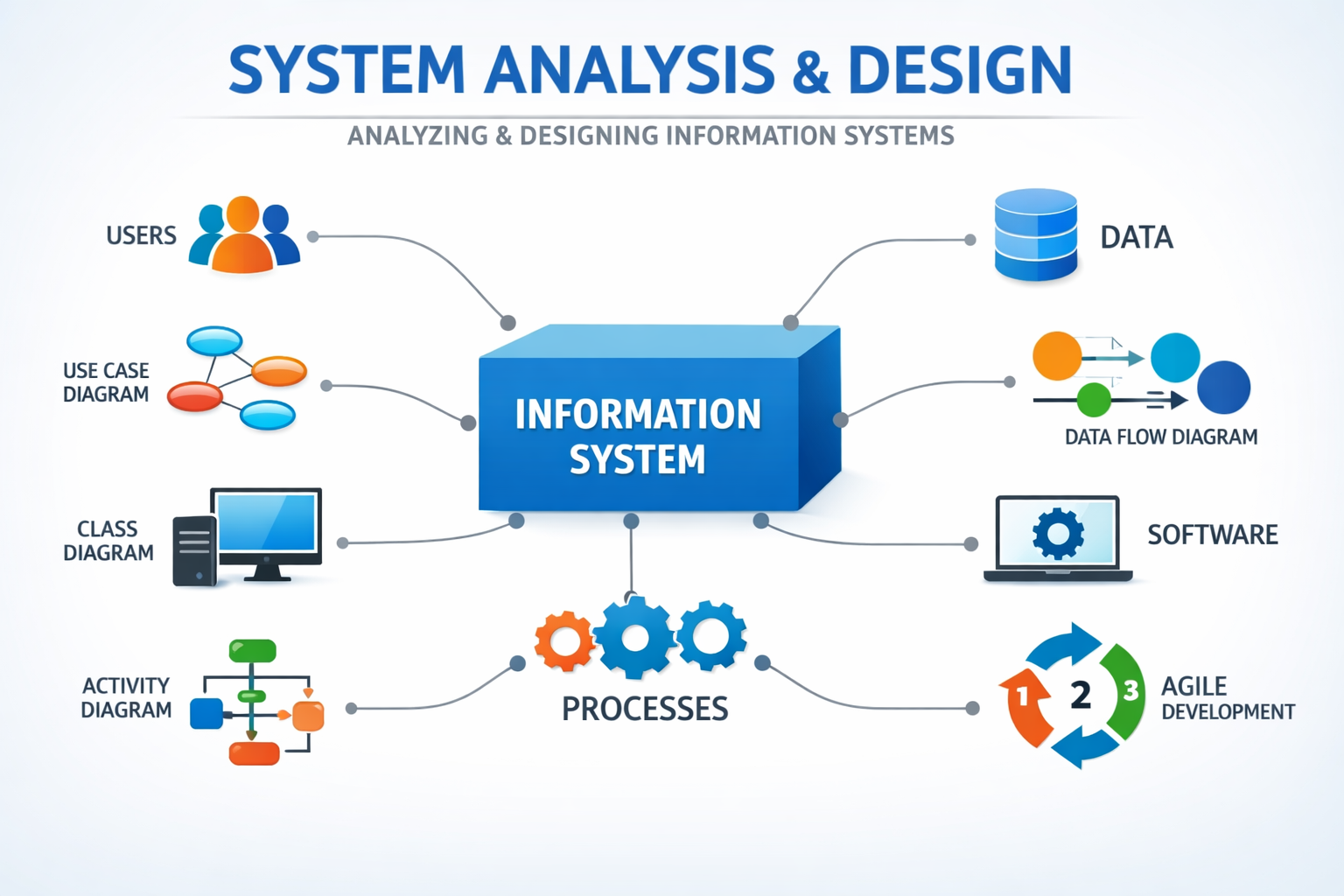
- Flowcharts – Visualize processes
- Data Flow Diagrams (DFDs) – Show data movement
- Entity-Relationship Diagrams (ERDs) – Represent database structures
- Use Case Diagrams – Describe system interactions
- SWOT Analysis – Identify strengths and weaknesses
Real-World Examples of System Analysis
1. Banking System
A bank analyzes its transaction system to:
- Reduce processing time
- Improve security
- Enhance customer experience
2. E-commerce Platform
An online store uses system analysis to:
- Optimize checkout processes
- Improve inventory tracking
- Reduce cart abandonment
3. Hospital Management System
Hospitals analyze systems to:
- Manage patient records
- Streamline appointments
- Improve care delivery
Skills Required for System Analysis
To become a successful system analyst, you need a mix of technical and soft skills:
Technical Skills:
- Understanding of databases
- Knowledge of programming basics
- Familiarity with system design tools
Soft Skills:
- Problem-solving
- Communication
- Critical thinking
- Attention to detail
Career Opportunities in System Analysis
System analysis is a high-demand field across industries.
Common Job Roles:
- System Analyst
- Business Analyst
- IT Consultant
- Software Analyst
Industries Hiring:
- Technology
- Finance
- Healthcare
- Government
- E-commerce
Challenges in System Analysis
While essential, system analysis comes with challenges:
- Miscommunication with stakeholders
- Changing requirements
- Budget constraints
- Resistance to change
Understanding these challenges helps analysts prepare better solutions.
Tips for Beginners
If you're just starting out, here are some practical tips:
- 📘 Learn the basics of system design and workflows
- 🧠 Practice problem-solving with real scenarios
- 🛠 Use tools like flowcharts and diagrams
- 🎯 Focus on understanding user needs
- 📚 Study real-world case studies
Conclusion
System analysis is the backbone of successful system development and business optimization. It helps organizations understand problems, design better solutions, and improve efficiency.
Whether you're aiming for a career in IT or simply want to understand how systems work behind the scenes, mastering system analysis is a valuable skill in today’s technology-driven world.
FAQs
1. What is system analysis in simple terms?
It’s the process of studying and improving systems to make them more efficient.
2. Is system analysis a good career?
Yes, it’s a high-demand field with opportunities across multiple industries.
3. What tools are used in system analysis?
Common tools include flowcharts, DFDs, ERDs, and use case diagrams.
4. Do I need coding skills for system analysis?
Basic programming knowledge is helpful but not always required.

No comments yet — be the first to join the discussion!