Introduction
System analysis and design is a critical process in understanding how an existing Information System (IS) operates and how it can be improved. Rather than building a new system from scratch, system analysis focuses on evaluating current technology infrastructure, workflows, and data systems to identify gaps and opportunities for improvement.
Understanding Information Systems (IS)
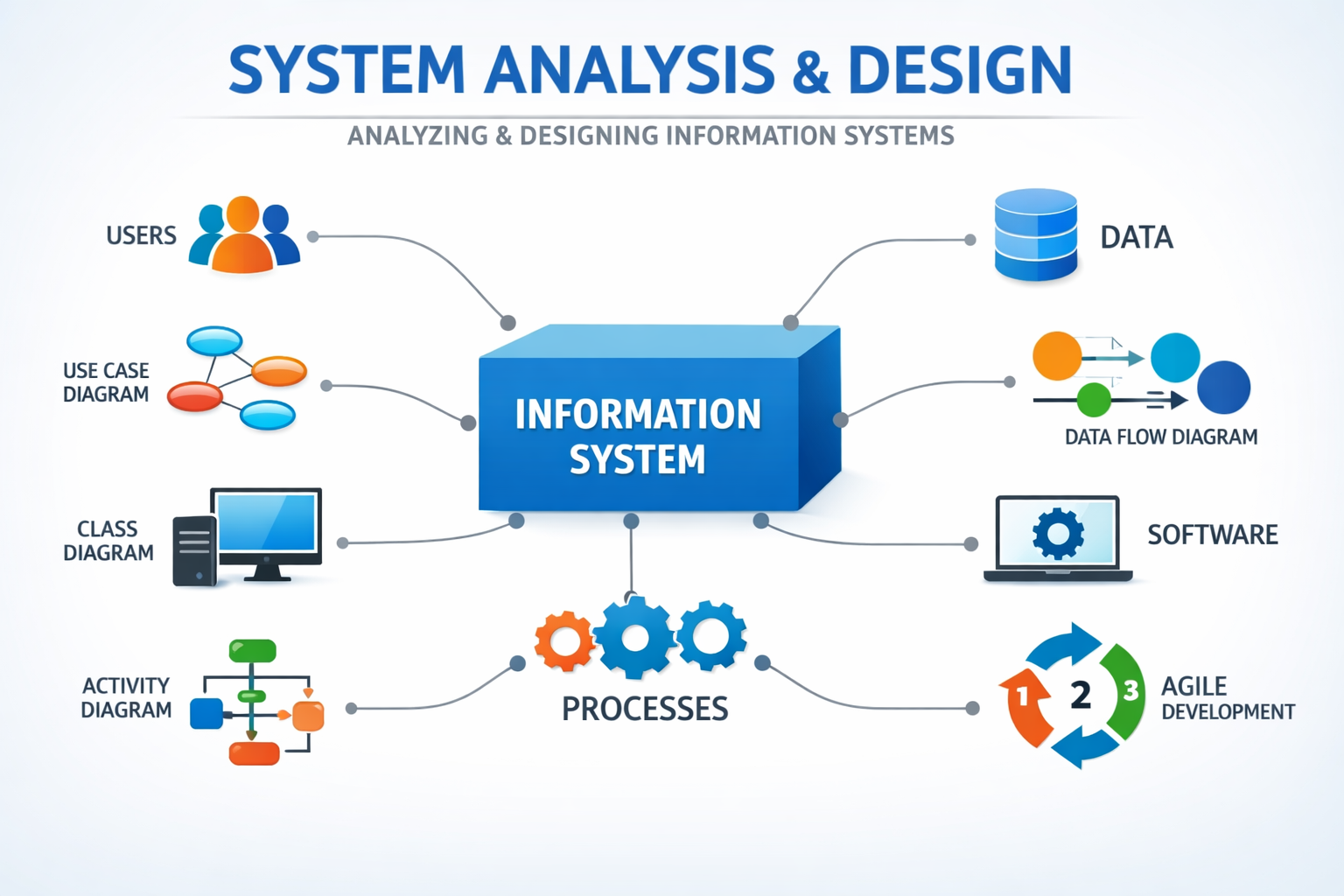
An Information System consists of five core components:
- Users
- Hardware
- Software
- Data
- Processes
Analyzing an IS involves examining how these components interact to support business operations and decision-making.
Approaches to System Analysis
There are two major approaches used in system analysis:
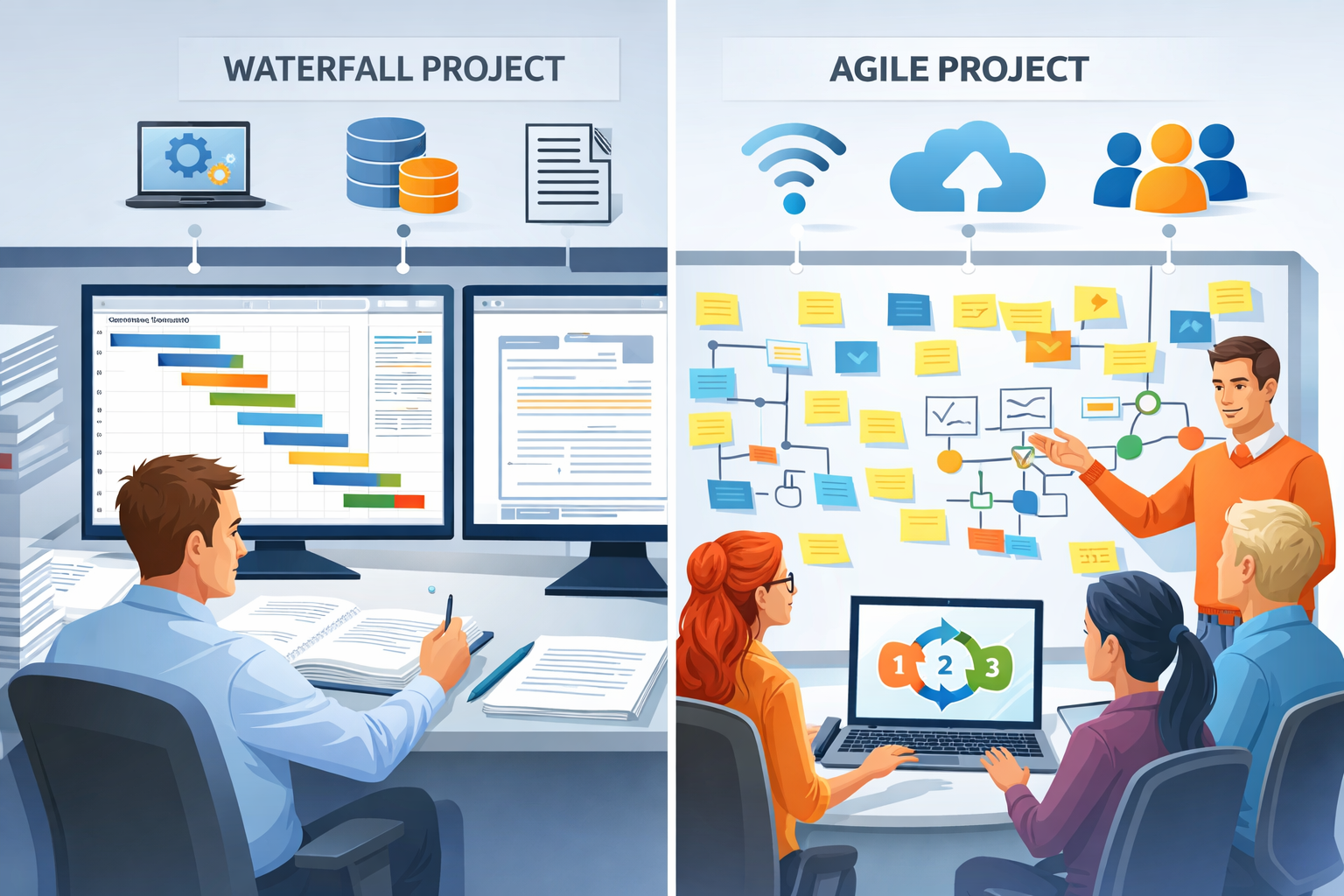
1. Structured Approach (Waterfall Model)
- Best suited for stable environments where requirements rarely change.
- Follows a linear and sequential process.
- Emphasizes detailed planning and documentation before development begins.
2. Agile Approach
- Ideal for dynamic environments with evolving requirements.
- Focuses on iterative development, continuous feedback, and collaboration.
- Encourages adaptability and rapid delivery of working solutions.
Core Agile Values and Mindset
Agile is built on four key values:
- Individuals and interactions over processes and tools
- Working software over comprehensive documentation
- Customer collaboration over contract negotiation
- Responding to change over following a plan
Supporting principles include communication, simplicity, feedback, courage, and humility. Agile also promotes “modeling with a purpose,” where diagrams and models are created only when they add value.
System Modeling Tools and Techniques
1. SSADM Techniques
- Data Flow Diagrams (DFDs): Show how data moves through a system.
- Logical Data Modeling: Defines entities, attributes, and relationships.
- User and Entity Behavior Analytics (UEBA): Helps understand user patterns and detect security threats.
2. UML Diagrams
- Use Case Diagrams: Show interactions between users and systems.
- Class Diagrams: Represent system structure (classes, attributes, methods).
- Activity Diagrams: Illustrate workflows and processes.
- Sequence Diagrams: Show interactions over time.
- State Machine Diagrams: Model event-driven behavior.
System Design and Architecture
System design ensures scalability, performance, and cost efficiency. Common architectures include:
- Monolithic Architecture: Simple and cost-effective for small systems.
- Microservices Architecture: Scalable and flexible for complex systems.
- Modular Architecture: Promotes simplicity and maintainability.
- AI Agentic Architecture: Supports intelligent and autonomous system behavior.
System Design Process
A typical system design process includes:
- Problem identification
- Research and data gathering
- Requirement definition
- Ideation and solution selection
- Prototyping (low and high fidelity)
- Testing and evaluation
- Implementation and refinement
Factors Influencing System Design
Several factors shape how systems are designed:
- Business Requirements: Define system goals and functionality.
- Scalability Needs: Ability to handle growth.
- Performance Expectations: Speed and efficiency requirements.
- Cost and Resources: Budget and available expertise.
- Technology Infrastructure: Existing systems and platforms.
- Security Requirements: Data protection and threat prevention.
- User Behavior and Usability: Ease of use and interaction patterns.
- Organizational Workflows: Alignment with business processes.
- Development Methodology: Agile vs Waterfall.
- Integration Needs: Interaction with external systems.
- Data Management: Storage, retrieval, and consistency.
Conclusion
System analysis and design is essential for building efficient, scalable, and secure information systems. By combining structured methodologies like SSADM with modern Agile practices, organizations can adapt to changing requirements while maintaining clarity and quality. Understanding system models, architectures, and influencing factors ensures that solutions align with both technical and business needs.


No comments yet — be the first to join the discussion!