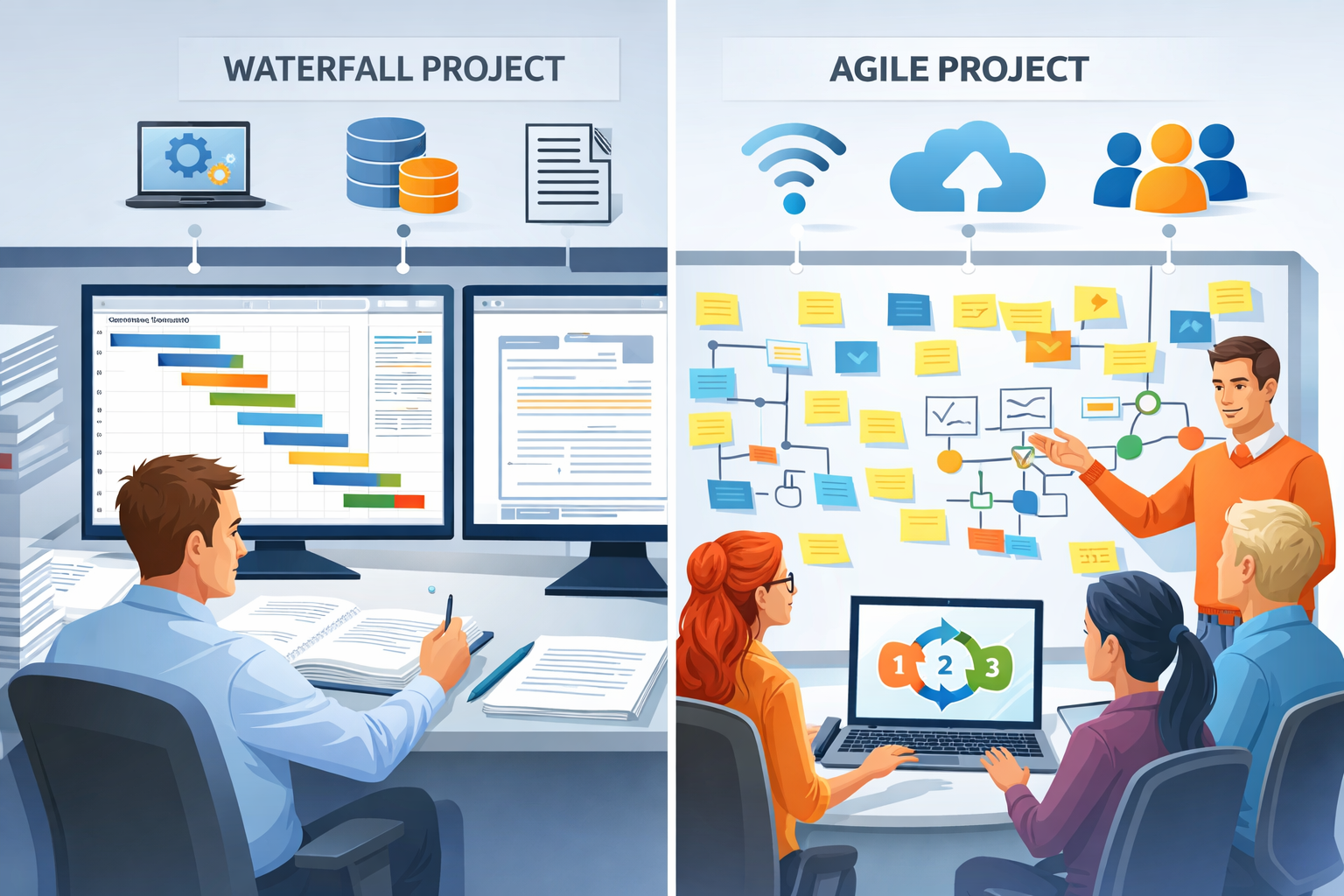
Explore the differences between Agile and Waterfall approaches, their pros and cons, and when to use each in system analysis projects.
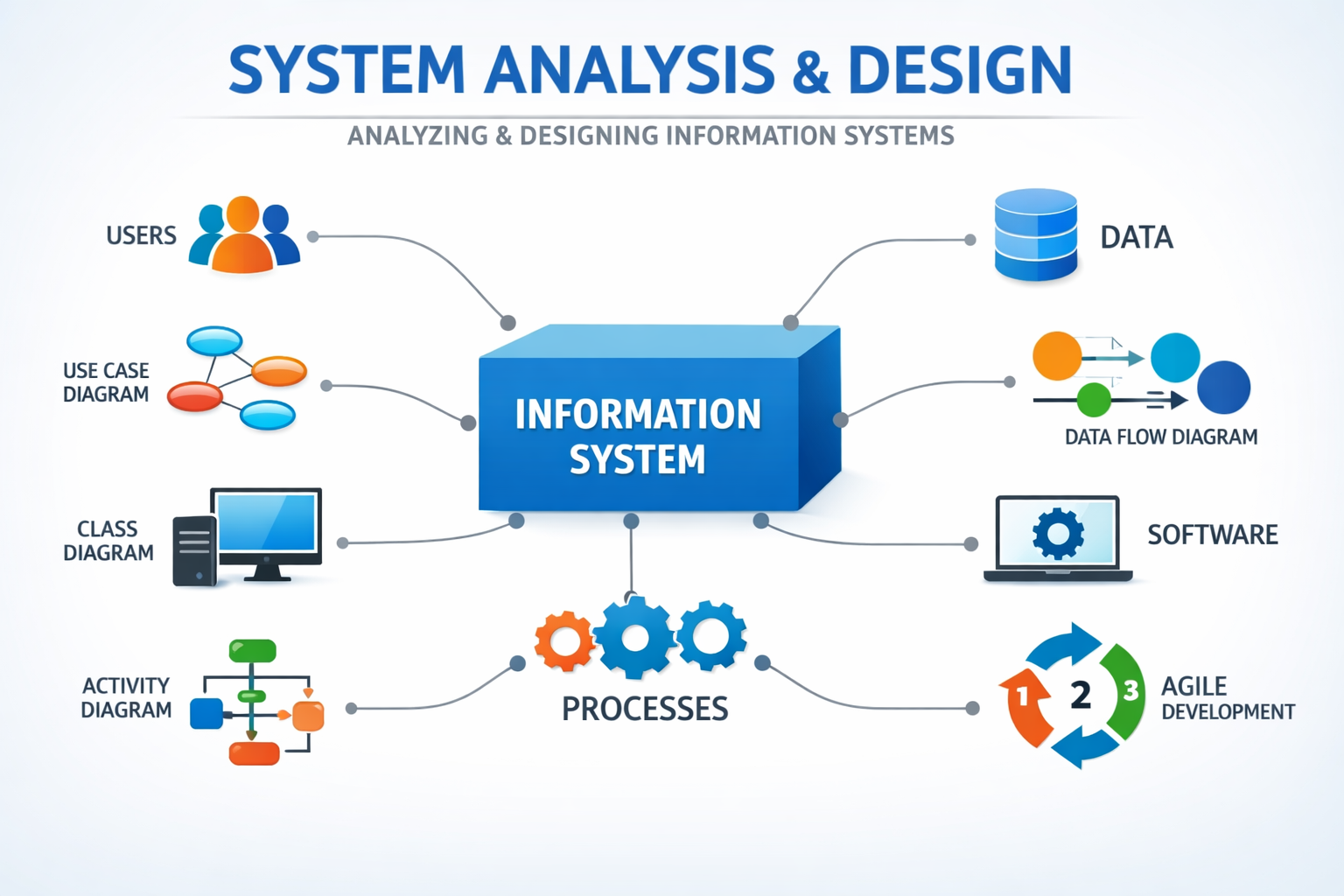
System analysis is a critical phase in understanding how an existing Information System (IS) operates without necessarily building a new system from scratch. It involves examining technology infrastructure, workflows, data systems, and user interactions to identify areas for optimization and informed decision-making.
When analyzing an IS, two primary approaches dominate project management and system design: Waterfall and Agile. Choosing the right methodology depends on factors such as requirement stability, organizational needs, and user behavior.
Waterfall Approach: Structured and Sequential
The Waterfall model is a linear and structured approach, ideal when requirements are stable and well-defined. Its characteristics include:
- Sequential Phases: Requirements → Design → Implementation → Testing → Deployment → Maintenance.
- Structured Documentation: Every step is meticulously documented to ensure clarity and accountability.
- Predictable Outcomes: Since requirements are unlikely to change, Waterfall ensures that the final system matches the initial specifications.
Techniques in Structured System Analysis
Analysts often use tools and methodologies from SSADM (Structured Systems Analysis & Design Methodology):
- Data Flow Modeling (DFDs): Break complex business problems into manageable components by mapping processes, inputs, and outputs.
- Logical Data Modeling: Define entities (e.g., Customer, Order), attributes (Customer Name, Order Date), and relationships (Customer places Order).
- User & Entity Behavior Analytics (UEBA): Identify patterns in user behavior and potential security threats within the system.
Waterfall is ideal for organizations that have predictable workflows, stable business processes, and well-understood data management needs. A classic example is a university registration system where processes such as enrollment, course selection, and fee payment follow clearly defined steps.
Agile Approach: Dynamic and Iterative
Modern systems are rarely static, which is where Agile shines. Agile reflects today’s fast-paced, iterative development environment:
- Adaptive Requirements: Unlike Waterfall, Agile embraces evolving requirements.
- Stakeholder Collaboration: Continuous feedback from users and stakeholders ensures the solution meets actual needs.
- Iterative Development: Work is done in small, incremental iterations to allow flexibility and refinement.
Core Agile Values:
- Individuals & Interactions over processes and tools.
- Working Solutions over comprehensive documentation.
- Customer Collaboration over contract negotiation.
- Responding to Change over following a rigid plan.
Supporting Agile Mindsets:
- Communication: Frequent, open dialogue ensures alignment.
- Simplicity: Focus only on what’s necessary to solve the problem.
- Feedback: Continuous validation ensures solutions stay relevant.
- Courage & Humility: Teams are empowered to experiment and value diverse insights.
Agile Modeling Principles
In Agile, modeling is lightweight and purposeful. Every diagram—whether a DFD, UML Use Case, or Class Diagram—serves a specific goal, such as clarifying requirements, guiding development, or communicating workflow insights. This avoids the bureaucratic overhead common in traditional Waterfall modeling.
UML Diagrams in System Analysis
Both approaches can leverage UML tools for system visualization:
- Use Case Diagrams: Show interactions between users and systems.
- Class Diagrams: Define entities, attributes, and relationships.
- Activity Diagrams: Illustrate business processes and workflows.
- Sequence & State Machine Diagrams: Track events and system responses over time.
These visualizations help analysts understand existing systems, identify bottlenecks, and propose improvements without altering the current IS unnecessarily.
Choosing the Right Approach
The decision between Agile and Waterfall depends on system complexity, organizational workflow, and project goals. Key influencing factors include:
- Business Requirements: Stable vs. evolving needs.
- Scalability: Monolithic systems for simple growth; microservices for dynamic expansion.
- Performance Expectations: High-speed systems may require iterative testing (favoring Agile).
- Cost & Resources: Agile can reduce wasted effort but may need more skilled personnel.
- Technology Infrastructure: Compatibility with cloud services, existing software, and data management.
- Security Needs: Systems like hospital IS require rigorous compliance, sometimes favoring Waterfall for controlled rollout.
- User Behavior & Usability: Agile’s iterative feedback ensures user-centric design.
- Integration Needs: APIs and external systems often benefit from Agile’s adaptability.
- Organizational Workflows: Waterfall works well in structured environments; Agile suits dynamic teams.
Example Scenarios:
- A banking system handling secure transactions may lean toward Waterfall for predictability and compliance.
- A startup developing a mobile app benefits from Agile, adapting to changing customer requirements with rapid feedback loops.
- E-commerce platforms like Amazon require microservices and iterative design to handle spikes in traffic and new features.
Final Thoughts
- Waterfall is ideal for systems with clear, stable requirements, predictable workflows, and minimal change.
- Agile thrives in dynamic environments where requirements evolve and user collaboration is essential.
- Hybrid approaches often combine the strengths of both, using Waterfall for compliance-critical components and Agile for innovation-focused modules.
By understanding the nature of the system, stakeholders, and technical environment, analysts can select the methodology that ensures efficiency, adaptability, and long-term value.

No comments yet — be the first to join the discussion!